Services, servers, and data plumbing behind the research web stack.
Services & APIs
The legacy typhoon service runs on a Spring backend; internal apps use
Next.js/Node with SQLite; research pipelines and data collectors are Python.
Each service is kept small and independently deployable.
SpringNode.js / Next.jsPythonSQLite
Deployed services
Four web services run behind the same Nginx front door, each on its own
domain and certificate. Front-end details are on the
Front page.
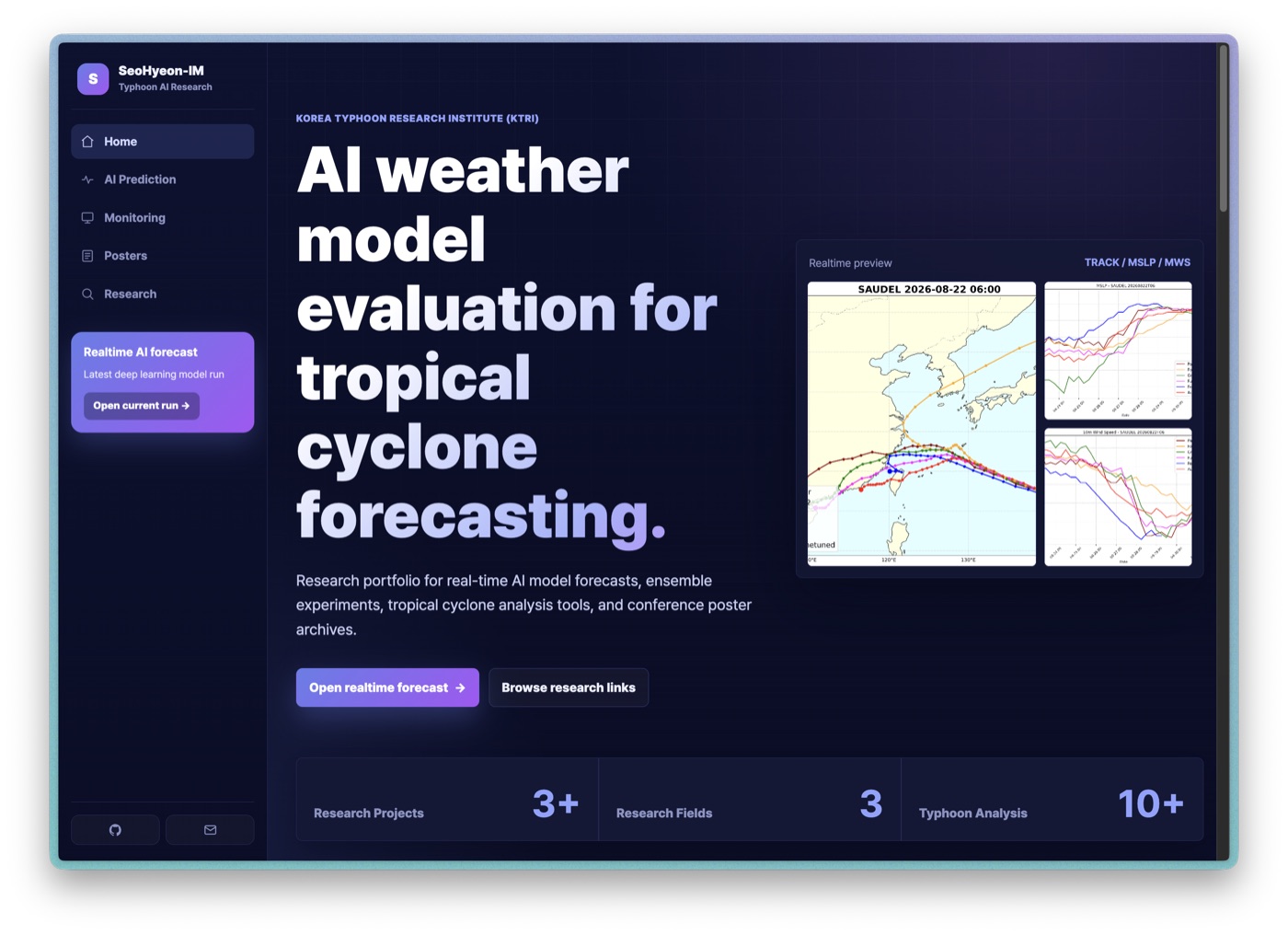
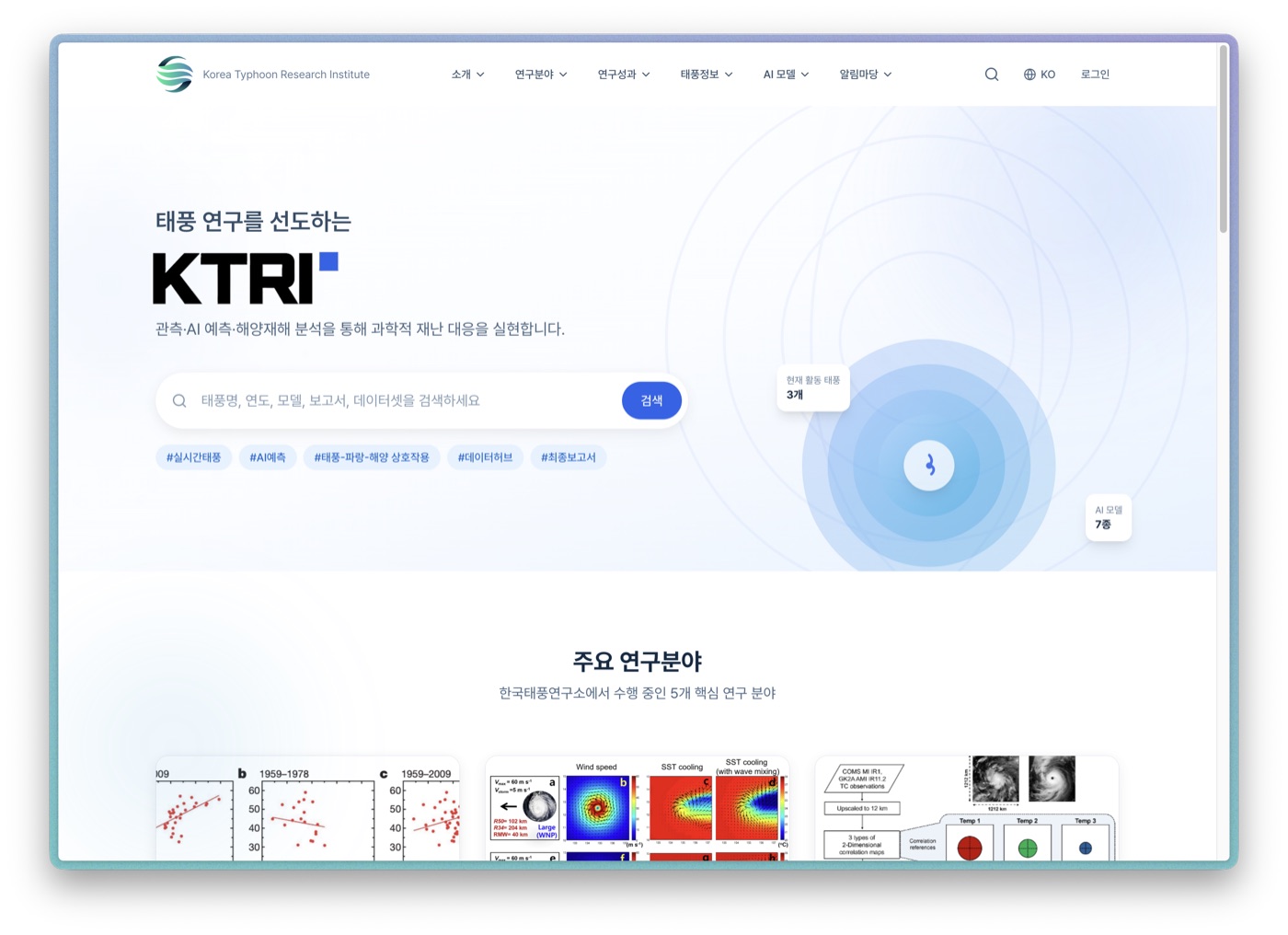
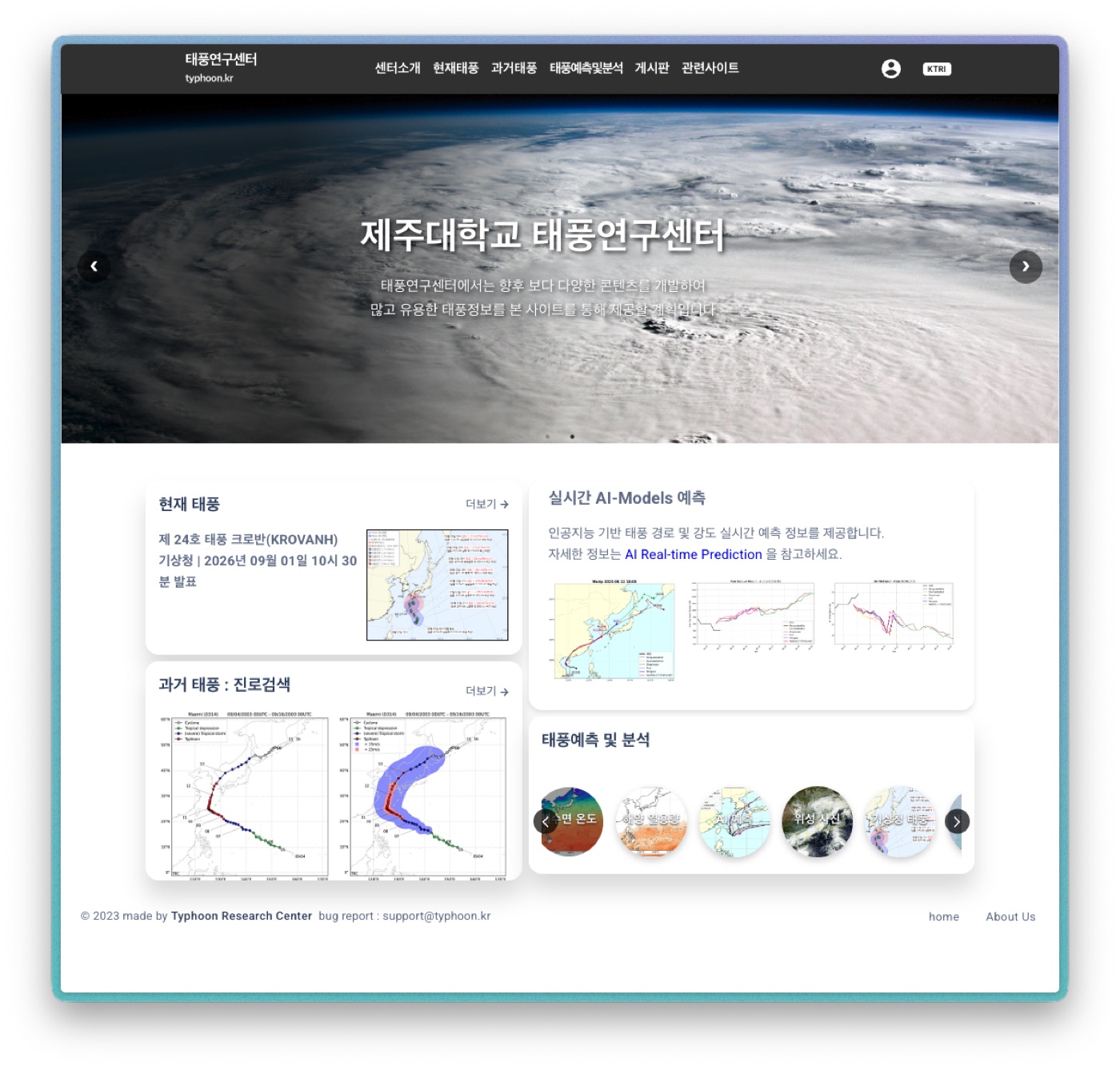
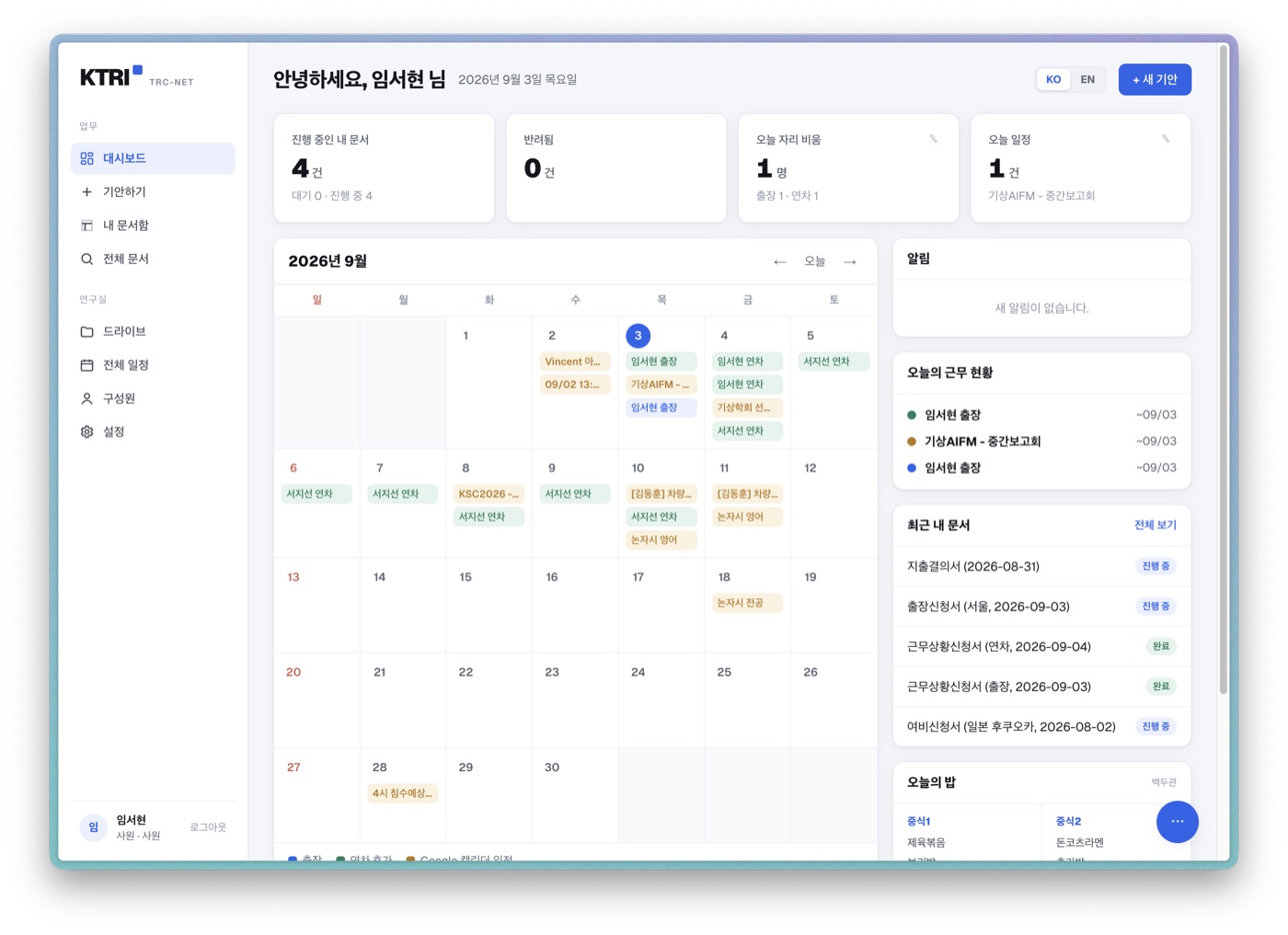
ish.typhoon.krStatic HTML · Nginx · realtime JSON manifestsKTRI websiteInstitute public site · search API · live counterstyphoon.krReact SPA · Spring backendTRC-NETNext.js · Node · SQLite · PM2
Web server & TLS
Per-domain Nginx virtual hosts with individual SSL certificates and an HTTPS
API proxy. Wildcard vhosts were removed so each service is isolated, and
requests to unregistered hostnames are dropped at the server.
NginxSSL per domainDomain isolation
Scheduling & processes
Recurring collection and post-processing run under cron, PM2, and systemd,
with duplicate-run cleanup between schedulers. Collectors are idempotent —
unique-path upserts and seen-record checks prevent duplicate ingestion.
cronPM2systemdIdempotent collectors
Data layer
Large raw files stay on the filesystem while a metadata database (10 tables)
indexes paths, models, data types, and timestamps — a hybrid that keeps
1982–2025 legacy archives searchable without moving them. 16 scheduled jobs
collect and post-process KMA, JTWC, RSMC, GK2A, OSTIA, and HYCOM data.
A dashboard tracks server status, GPU utilization, cluster nodes, and process
health, with OOM and resource-pressure issues diagnosed from collected
metrics.